
The Challenge: A Deeper Look
Introduction: The Sacred and Sensitive Work of Postpartum Healing
After the monumental effort of childbirth, your body enters a new and sacred phase: recovery. The postpartum period, often called the "fourth trimester," is a time of profound healing, especially for your perineal area. Whether you had a straightforward delivery or experienced tearing, the soreness, swelling, and sensitivity are real. Many new mothers seek gentle, natural ways to soothe discomfort, promote healing, and feel more comfortable in their own bodies.
Navigating postpartum care can feel overwhelming, but nature provides a wealth of simple, effective remedies. This guide is dedicated to helping you understand and implement these gentle practices, empowering you to care for yourself with the same love and attention you pour into your new baby. Remember, your healing is not a luxury—it is a necessity.
Disclaimer: The information in this article is for informational purposes only. Always consult with your doctor, midwife, or a qualified healthcare provider before starting any new postpartum care routine, especially if you have had stitches, a complicated delivery, or any signs of infection.
Your Path Forward: Practical Solutions
The Foundation of Healing: The First 24-48 Hours
In the immediate hours and days after birth, your primary focus should be on rest and basic care. The simplest actions are often the most powerful.
1. Ice Packs (Padsicles) for Immediate Swelling Relief
Swelling is your body's natural response to the trauma of birth. Applying cold therapy is the most effective way to reduce inflammation and numb soreness.
How to Make a "Padsicle":
- Take a large, thick maternity pad.
- Open the wrapper but don't detach the pad. Lightly spray it with water (don't soak it).
- Generously apply alcohol-free witch hazel and a few drops of pure aloe vera gel down the center.
- Optional: Add 1-2 drops of lavender essential oil for its calming and antiseptic properties.
- Fold the pad, wrap it back in its wrapper, and place it in a ziplock bag in the freezer.
Use these padsicles for 20-minute intervals during the first 24-48 hours. The cold provides immediate relief, while the witch hazel helps shrink swollen tissues.
2. The Peri Bottle: Your New Best Friend
Wiping with toilet paper can be incredibly irritating to sore, stitched tissue. The peri bottle (a small squirt bottle) is a must-have for gentle cleansing.
How to Use It:
- Fill the bottle with warm water before each trip to the bathroom.
- While urinating, squirt the warm water over your perineum. This dilutes the urine and prevents stinging.
- Afterward, use the bottle to gently rinse the entire area clean.
- Pat dry gently with a soft towel or by using a hairdryer on a cool setting. Do not rub.
Soothing and Healing: Remedies for the First Few Weeks
As the initial swelling subsides, you can transition to remedies that promote circulation and tissue repair.
3. Herbal Sitz Baths
A sitz bath is a shallow, warm bath that cleanses and soothes the perineum. After the first 24-48 hours, warmth can increase blood flow and promote healing. Adding healing herbs can enhance the benefits.
DIY Herbal Sitz Bath Recipe:
- Ingredients: 1/4 cup comfrey leaf, 1/4 cup lavender flowers, 1/4 cup calendula flowers, 1/4 cup sea salt or Epsom salt.
- Preparation: Steep the herbs in a pot of hot water for 20 minutes, then strain the liquid into your shallow sitz bath or bathtub filled with a few inches of warm water. Add the salt and stir to dissolve.
- How to Use: Sit in the bath for 15-20 minutes, 1-2 times per day.
These herbs are known for their anti-inflammatory, antiseptic, and tissue-healing properties.
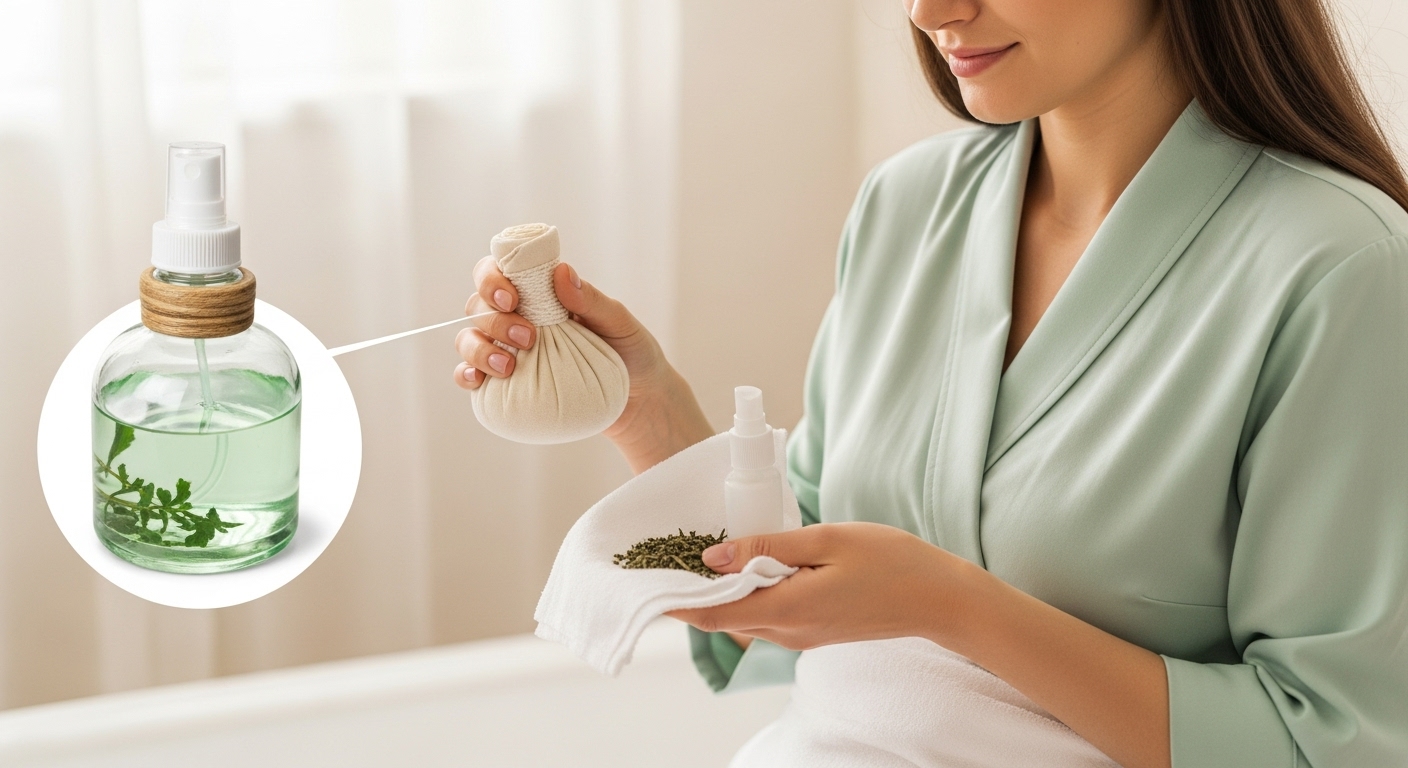
4. Perineal Healing Sprays
A DIY or store-bought perineal spray can provide cooling relief throughout the day.
DIY Perineal Spray Recipe:
- In a small spray bottle, combine:
- 1/2 cup alcohol-free witch hazel
- 1 tablespoon aloe vera gel
- 5 drops of lavender essential oil
- 5 drops of frankincense essential oil (optional, for skin regeneration)
Shake well before each use and spray on the perineal area after using the bathroom or whenever you need soothing relief. Store in the refrigerator for an extra cooling effect.
The Reward: Embracing the Benefits
Internal Healing and Pelvic Floor Support
Healing isn't just about the external tissues. Supporting your internal structures is just as important.
5. Gentle Pelvic Floor Engagement (NOT Intense Kegels)
In the very early days, the goal is not to aggressively strengthen but to gently reconnect with your pelvic floor muscles. Intense Kegels can be too much for healing tissues.
How to Practice:
- Lie down comfortably.
- Take a deep breath in and let your belly and pelvic floor relax and expand.
- As you exhale, gently draw your pelvic floor muscles up and in, as if you are sipping a smoothie through a straw.
- Hold for just 2-3 seconds, then fully release and relax for 10 seconds.
- Repeat 5-10 times, focusing on the relaxation phase as much as the contraction.
6. Proper Posture and Body Mechanics
How you sit, stand, and lift has a huge impact on your healing pelvic floor.
- When sitting: Use a donut pillow or rolled-up towel to relieve pressure on your perineum.
- When getting up: Roll onto your side first and use your arms to push yourself up, rather than using your core.
- Avoid heavy lifting: Don't lift anything heavier than your baby for the first 6 weeks.
Nourishment for Healing: The Role of Diet
The foods you eat provide the building blocks for tissue repair.
- Protein: Essential for repairing tissues. Include lean meats, fish, eggs, beans, and lentils in your diet.
- Vitamin C: Crucial for collagen synthesis. Oranges, strawberries, bell peppers, and broccoli are great sources.
- Zinc: Supports wound healing. Find it in nuts, seeds, and whole grains.
- Fiber and Fluids: To prevent constipation, which puts strain on the perineum. Eat plenty of fruits, vegetables, and whole grains, and drink lots of water.
Conclusion: Be Patient and Kind to Your Healing Body
Postpartum recovery is a marathon, not a sprint. The pressure to "bounce back" is unrealistic and unhelpful. Your body has performed a miracle, and now it needs time, patience, and gentle care to heal. By incorporating these natural remedies—from soothing sitz baths and padsicles to nourishing foods and gentle movement—you are actively participating in your own recovery. Listen to your body’s signals, accept help when it’s offered, and give yourself the same grace and love you give to your new baby. Your healing journey is a vital part of your motherhood story.