
The Challenge: A Deeper Look
Introduction: The Two-Week Wait and the Spotting Dilemma
For anyone trying to conceive, the two-week wait between ovulation and a missed period can be a time of heightened awareness and anxiety. Every twinge, cramp, and symptom is scrutinized. Then, a few days before your expected period, you notice some light spotting. Is it an early period, dashing your hopes for this month? Or could it be implantation bleeding, one of the earliest possible signs of pregnancy? This uncertainty can be incredibly stressful. Differentiating between the two is tricky because they can seem similar, but there are key differences in timing, appearance, and symptoms that can offer valuable clues. This comprehensive guide will break down everything you need to know to help you distinguish between implantation bleeding and your regular period, providing clarity during a time of anxious waiting.
Your Path Forward: Practical Solutions
What is Implantation Bleeding? The Science Explained
Implantation bleeding is light spotting or bleeding that occurs when a fertilized egg attaches itself to the lining of your uterus. This process is a critical step in early pregnancy.
- The Journey: After fertilization (which happens in the fallopian tube), the newly formed embryo travels down to the uterus. This journey takes about 6 to 12 days.
- The Attachment: Once in the uterus, the embryo burrows into the uterine wall, which is rich in blood vessels and nutrients. This burrowing process can disrupt tiny blood vessels, causing a small amount of bleeding.
- Not Everyone Experiences It: It's important to know that implantation bleeding only occurs in about 25-30% of pregnancies. So, if you don't experience it, it doesn't mean you're not pregnant.
What is a Period? The Body's Monthly Cycle
A menstrual period, on the other hand, is the shedding of the uterine lining (the endometrium). This happens when a pregnancy has *not* occurred.
- Hormonal Drop: If an egg is not fertilized, the levels of the hormones progesterone and estrogen drop.
- Shedding the Lining: This hormonal drop signals your body that the thickened uterine lining is no longer needed to support a pregnancy. The lining breaks down and is shed, resulting in menstrual bleeding.
- A Regular Cycle: This process marks the start of a new menstrual cycle.
Key Differences: Implantation Bleeding vs. Period
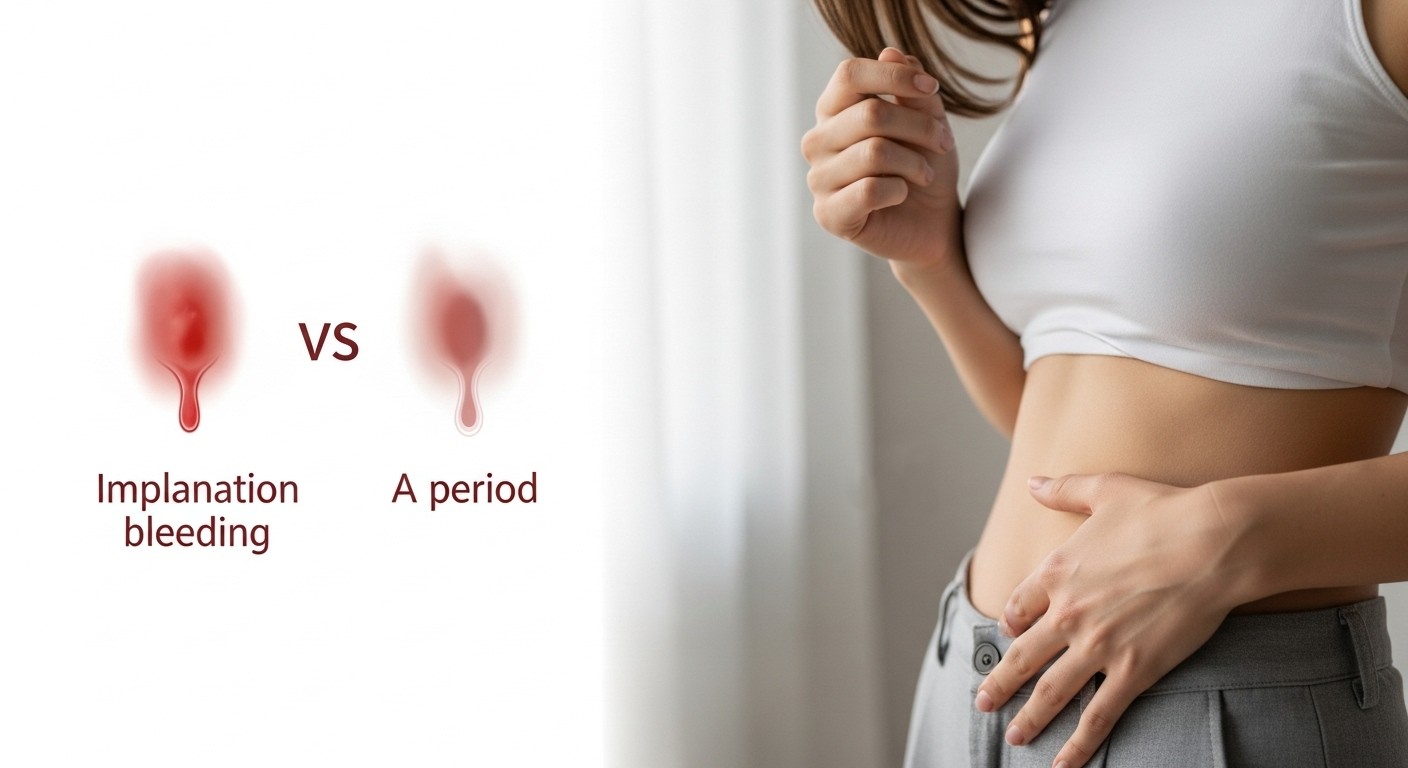
To tell the difference, you need to pay attention to four key factors: Timing, Color, Flow, and Cramping.
1. Timing: When Does the Bleeding Occur?
- Implantation Bleeding: Typically occurs about **6 to 12 days after ovulation** (and conception). This often translates to a few days *before* your expected period. If you have a regular 28-day cycle and ovulate on day 14, you might see implantation spotting anywhere from day 20 to day 26.
- Period: Starts on the day your period is expected, usually around **14 days after ovulation**. It marks the end of your luteal phase and the beginning of a new cycle.
The Bottom Line on Timing: Bleeding that happens several days to a week before your period is due is more likely to be implantation bleeding. Bleeding that starts on or after your expected period date is more likely to be your period.
2. Color: What Does the Bleeding Look Like?
- Implantation Bleeding: The color is typically **light pink, brown, or a rusty color**. This is because it’s old blood that has taken some time to travel from the uterine wall out of the body. It is rarely bright red.
- Period: Usually starts as light pink or brown but quickly progresses to a **vibrant, bright red** as the flow becomes heavier.
The Bottom Line on Color: Pink or brown spotting is more indicative of implantation. Bright red blood is more characteristic of a period.
The Reward: Embracing the Benefits
3. Flow: How Heavy is the Bleeding?
- Implantation Bleeding: The flow is very light—it's more accurately described as **spotting**. It’s usually not enough to fill a pad or tampon. It may be intermittent, appearing only when you wipe, or as a few spots on your underwear.
- Period: The flow starts light and then **progressively gets heavier** over a few days before tapering off again. It requires the use of a pad, tampon, or menstrual cup.
The Bottom Line on Flow: Implantation bleeding is spotting. A period has a distinct, increasing flow.
4. Duration: How Long Does It Last?
- Implantation Bleeding: It is very short-lived. It can last anywhere from a **few hours to a maximum of 48 hours**. It does not follow a pattern of getting heavier.
- Period: A typical period lasts for **3 to 7 days**, with a predictable pattern of light, then heavy, then light again.
The Bottom Line on Duration: Spotting that disappears after a day or two is more likely implantation. Bleeding that lasts for several days is a period.
5. Cramping: What Does the Pain Feel Like?
- Implantation Cramping: The cramping associated with implantation is typically **mild, dull, and fleeting**. Some women describe it as a light pulling, pricking, or tingling sensation in the lower abdomen. It doesn't usually escalate in intensity.
- Menstrual Cramps: Period cramps are caused by uterine contractions shedding the lining. They are often more intense, persistent, and can feel like a throbbing or aching pain. For many women, menstrual cramps build in intensity over the first day or two of their period.
The Bottom Line on Cramping: Light, sporadic twinges are more aligned with implantation. Strong, rhythmic cramps are more typical of a period.
Side-by-Side Comparison Chart
| Feature | Implantation Bleeding | Period |
|---|---|---|
| Timing | 6-12 days after ovulation (before period is due) | Around 14 days after ovulation (when period is due) |
| Color | Light pink, brown, rusty | Starts light, turns to bright red |
| Flow | Very light spotting, not a real flow | Starts light, becomes heavier, then tapers off |
| Duration | A few hours to 2 days | 3 to 7 days |
| Clots | Generally no clots | Can have clots, especially on heavy days |
| Cramping | Mild, intermittent, pulling or tingling | More intense, persistent, and crampy |
Other Early Pregnancy Symptoms to Look For
If you’re experiencing what you think might be implantation bleeding, look for other early pregnancy signs that might accompany it. These are also caused by rising hormone levels:
- Breast Tenderness: Breasts that are sore, swollen, or heavy to the touch.
- Fatigue: An unusual level of exhaustion that isn't relieved by rest.
- Nausea: Mild morning sickness or food aversions.
- Basal Body Temperature: If you're tracking your BBT, a sustained high temperature for more than 18 days post-ovulation is a strong indicator.
When Should You Take a Pregnancy Test?
The waiting game is tough, but testing too early can lead to a false negative and unnecessary disappointment. Home pregnancy tests work by detecting hCG in your urine.
- For the most accurate result: Wait until the day of your missed period. By this time, hCG levels are usually high enough for a standard test to detect.
- If you can't wait: Some early-result tests can detect pregnancy a few days before your missed period. However, be aware that the result is more likely to be a false negative if you test too soon.
If you had what you believe was implantation bleeding and get a negative test result, wait a few more days and test again. It can take 2-4 days after implantation for hCG levels to become detectable.
Conclusion: Listen to Your Body and Be Patient
Distinguishing between implantation bleeding and a period can feel like detective work. By paying close attention to the timing, color, flow, and duration, you can gather important clues. Remember, implantation spotting is light, short-lived, and occurs *before* your expected period, while a period is a heavier, longer flow that arrives on schedule. Ultimately, the only way to know for sure is to wait and take a pregnancy test. Be patient with your body during this time, and know that whatever the outcome, you are learning more about its unique rhythms with every cycle.